 » Fri May 27, 2011 9:19 am
 The linearity is covered up with a bunch of optional stuff that really is not all that entertaining, but at least its not as repetetive as the first. If I was a game designer, this is not the sort of game I would make.
You talk about "linearity" like it's a bad thing, though. Most games are decidedly linear in composition (even GTA, for all it's "open-worldness" is just following the same path by giving you lots of optional stuff to do in between a series of missions that follow a straight line to a set resolution.) I don't even think they were going for "non-linearity," here - so much as attempting to break up the "rinse and repeate" cycle of the first game, a bit more.
I do agree with the next post down, that the controls could still be used to be tightened up a tad more. I very much enjoyed the reckless nature of the free-running aspect, but it does get rather easy to leap to your inevitable death (which often comes about from pushing the left stick just a tad off-target.) And I did find a tendency for the Racing min-games to be a little frustrating at times. The problem I found there was that while free-running I was already using my thumb and forefinger; and so didn't have any digits free to look around with the right stick to find where my next objective was. I think that's to a degree a flaw in the level design of those segments, however - if the checkpoints were spaced a bit closer together, and didn't require you to be stopping and looking around for your next destination, it might have run a lot smoother.
I also thought they seemed to have polished up the combat a bit more. I've still never quite got the hang of the rhythm game aspect of chaining attacks together (which made the late-game opponents especially hard, as they blocked just about everything I threw at them.) But when it worked right, it did come off as very interesting - being able to switch seemlessly from breaking through an opponent's defenses, counter-kill the next guy's, disarm a guy with a big axe (and kill him in one movement,) and then finish by using that same weapon to deal with the last guard. It could probably still use a bit more work, but it was an ejoyable part of the game - so much so that I found I was rarely worried about free-running to avoid encounters after an assassination, but dispatching the remaining guards and simply walking away, most of the time.
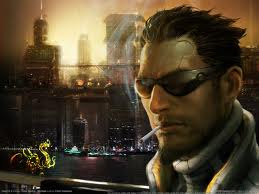
It wasn't the best game I've ever played, but I was quite addicted to it until I beat it, and it kept me coming back for more. I don't personally mind the Animus angle as such, but I do think they could have worked a bit more on blending the two stories together. That's something I felt they lost a bit, this time around. I don't think it's so much that Desmond is a terrible character, but that it's really hard to care what's going on with him, when he's only showing up in the game on very rare occasions. If more of the game was dedicated to playing as him, I think I'd have been able to get into his head a bit more.


 This game is just too good to not be recognized. And only 6 more days IIRC till some DLC!